
B1 vs B2 Visa: Key Differences and Which Fits Your Trip

The difference between B1 and B2 visa categories starts with your travel purpose: a temporary business visit or a personal visit. Understanding the combined B1/B2 label also helps you avoid confusing a visa with permission to work or stay indefinitely.
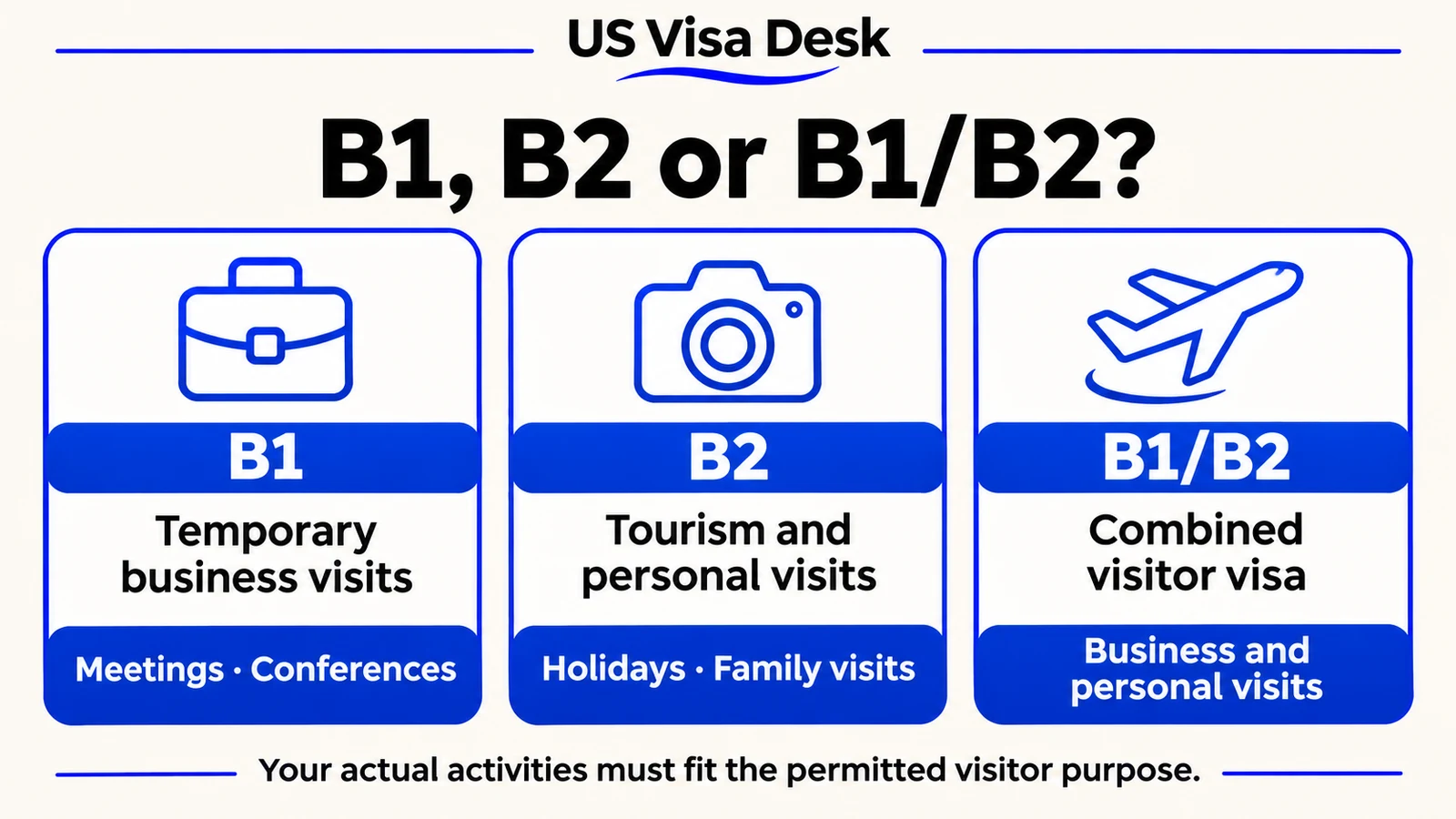
Quick answer: B1 covers eligible temporary business activities. B2 covers tourism and other eligible personal visits. B1/B2 combines those visitor purposes on one visa. Your planned activities still need to fit the applicable visitor rules. Official visitor visa overview.
US Visa Desk is a private visa assistance service, independent of the U.S. government. This guide provides general preparation information. Official sources checked: November 28, 2026.
B1 vs B2 visa: a quick comparison
| Category | Main purpose | Examples |
|---|---|---|
| B1 | Temporary business visits | Business meetings, conferences and contract negotiations |
| B2 | Tourism and personal visits | Holidays, family visits and medical treatment |
| B1/B2 | Combined visitor purposes | Eligible activities covered by the two classifications |
This comparison describes visitor categories, not different service packages or levels of approval. The Department of State distinguishes business, tourism and combined visitor purposes in its visitor visa guidance.
What is a B1 visa used for?
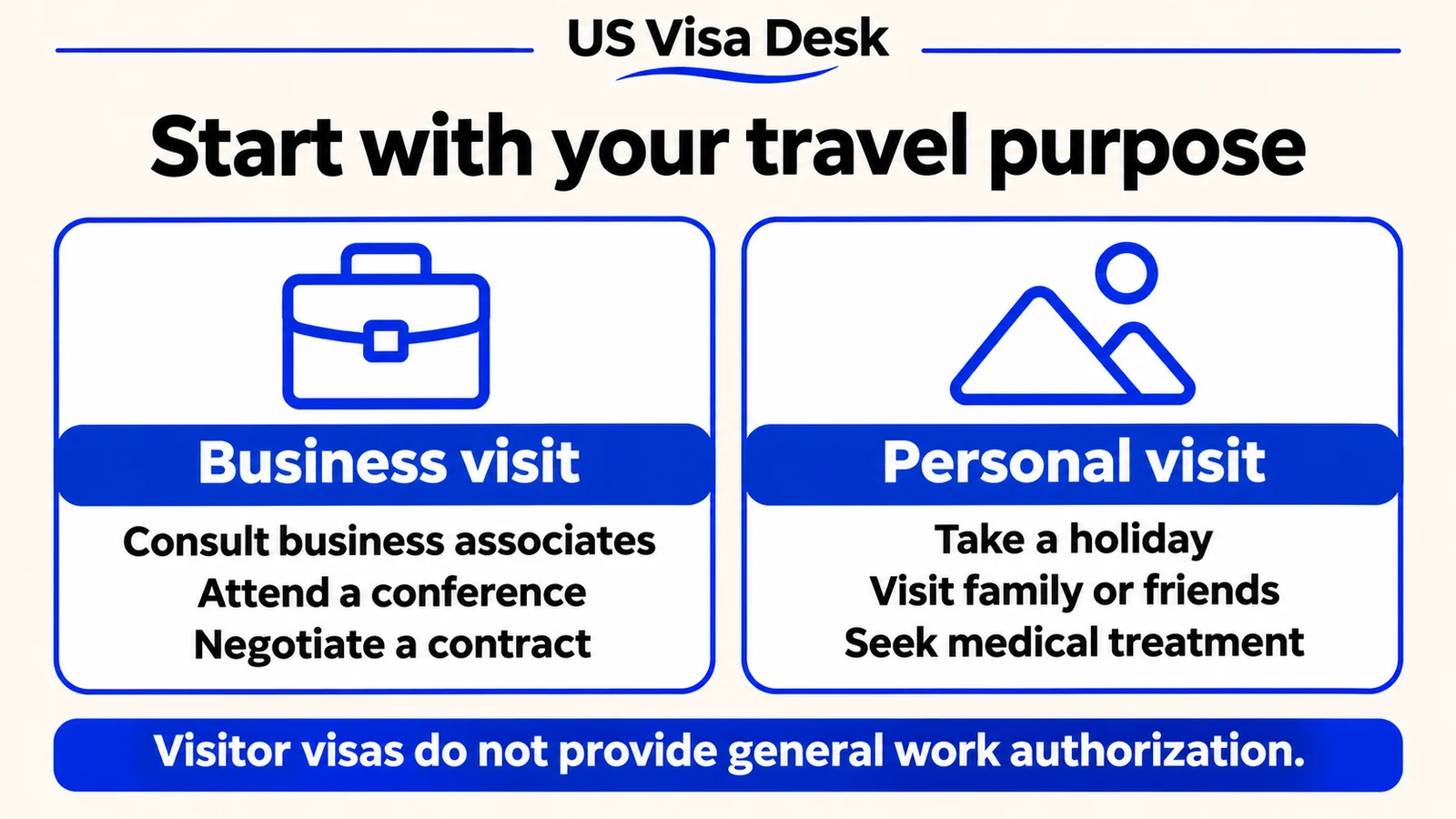
B1 is associated with qualifying temporary business travel. The State Department’s business fact sheet includes consulting business associates, negotiating contracts and attending professional conventions or conferences among its examples. It distinguishes qualifying activities from gainful employment in the United States. B1 business activities fact sheet.
For preparation, describe the activity rather than relying on the word “business.” A conference attendee might record the event name, dates and purpose of attendance. A person visiting business contacts might record the organizations involved and the planned discussions.
Do not assume every task performed for an overseas employer fits B1. If your itinerary involves delivering services, hands-on duties or a complicated payment arrangement, get qualified advice about those specific activities before applying or traveling. USCIS explains the B1 category and its eligibility requirements in its temporary business visitor guidance.
What is a B2 visa used for?
B2 concerns qualifying personal visits. U.S. regulations describe pleasure-related activities such as tourism, visiting relatives or friends, rest and medical treatment. The regulations also address additional conditions for applicants seeking medical treatment. Official visitor classification regulation.
As a planning exercise, explain the visit in ordinary terms: whom you will visit, the places you intend to see, your proposed dates and how the trip will be funded. A family visit and a holiday may share some preparation steps, but the details should reflect your own plans.
Parents preparing to visit a child can also read our B2 visa interview questions for parents. Use the prompts to organize truthful information rather than memorize someone else’s answers.
Difference between B1 and B1/B2 visa
The difference between B1 and B1/B2 visa labels is their scope: B1 identifies the business visitor category, while B1/B2 combines business and personal visitor purposes. The combined label does not create an unrestricted travel category. Department of State visitor categories.
Keep three separate questions in your notes: What does the visa label say? What will you actually do on this trip? What are the applicable conditions of admission? Treating these as separate checks helps prevent a broad visa label from becoming a substitute for reviewing your itinerary.
For example, describe a proposed conference visit as a conference visit. If you also plan a personal stay, explain that part accurately. Avoid changing the purpose merely because another applicant’s story sounds simpler.
Difference between B2 and B1/B2 visa
B2 is the personal visitor classification; a combined B1/B2 visa includes business visitor purposes as well. That is the key distinction behind searches such as “difference between B1/B2 and B2 visa.” Neither label is a ranking of an applicant’s reliability or a promise about admission.
If you already hold a visa, review its category and any annotations alongside your planned activities. When something is unclear, seek guidance about the actual trip instead of assuming that an additional letter on the visa automatically resolves it.
Practical examples: match the trip to its purpose
The following are hypothetical planning examples. They illustrate the comparison and do not establish an individual traveler’s eligibility.
| Proposed trip | Starting point for review | Useful preparation note |
|---|---|---|
| Attend an industry conference | B1 business activity | Record the event, dates and role you will have. |
| Spend a holiday sightseeing | B2 personal visit | Outline your intended itinerary and budget. |
| Visit a son or daughter | B2 family visit | Clarify the visit duration, accommodation and funding. |
| Attend meetings and then visit family | Review both visitor purposes | Describe each part of the trip separately and accurately. |
Compare business plans against the official B1 activity examples. Personal visit purposes are described in the visitor classification rules.
Visa validity and permitted length of stay are different
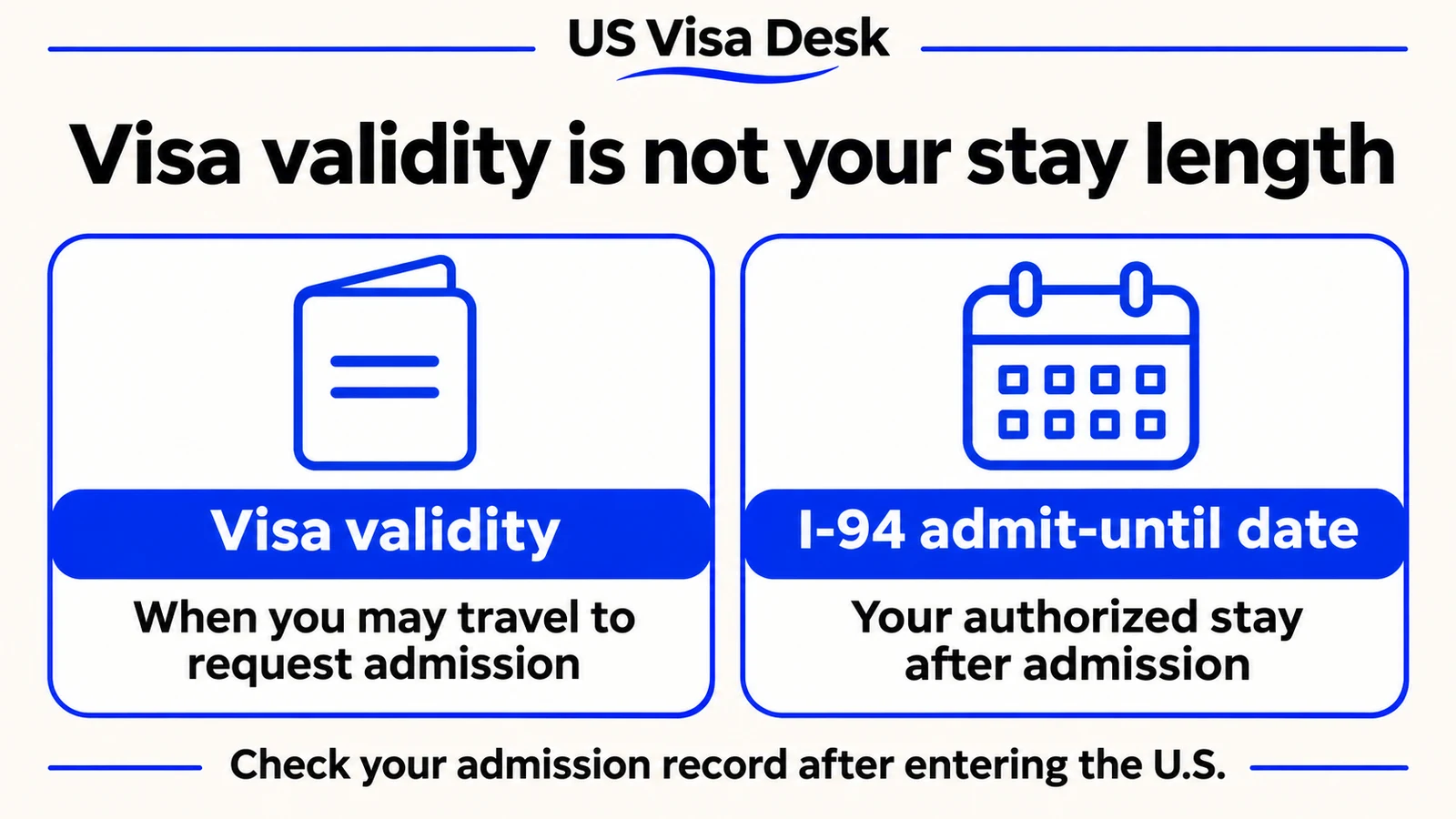
A visa expiration date does not tell you how long you may remain in the United States after admission. A visa allows you to travel to a port of entry and request admission; the immigration inspection determines whether you are admitted and the authorized period. What the visa expiration date means.
After entry, check the admission record and its admit-until information. CBP’s I-94 guidance explains that the admitted-until date controls the permitted stay recorded for the visitor. Do not substitute the visa’s expiry date for that deadline. Official I-94 help.
For your travel folder, keep the visa information and admission record as separate items. Check the record after each admission rather than carrying forward an assumption from a previous visit.
What to prepare before completing your application
Build a short information sheet around your real trip:
- Purpose: List the actual activities you intend to undertake.
- Timing: Note proposed dates and any arrangements still undecided.
- Contacts: Record relevant hosts, organizations or event details.
- Funding: Clarify who pays each part of the trip.
- Consistency: Compare the trip summary with your application information.
- Uncertainty: Flag any activity that needs professional clarification.
The State Department instructs applicants to complete the DS-160 accurately and completely. Its FAQ also explains signing, third-party assistance and the confirmation page needed for an interview. Official DS-160 FAQs.
For help organizing the form stage, explore our DS-160 assistance. For interview preparation, use our B2 visa interview guide. If a past application was refused, begin with the notice and our B1 visa rejection guide.
Frequently asked questions
What is the difference between a B1 and B2 visa?
The principal distinction is the travel purpose: qualifying temporary business activities for B1 and qualifying personal visits for B2. A combined B1/B2 visa covers the two visitor purposes.
Is B1/B2 better than B2?
“Better” is not a useful way to compare the labels. Begin with your actual activities and the requirements that apply to them, rather than treating a combined label as a premium version.
Can I work in the U.S. with a B1/B2 visa?
A visitor visa does not provide general permission to accept U.S. employment. Qualifying business visits and employment are different; specialized situations need a review of the specific rules. Review the B1 business activity guidance.
Does a long-validity visa let me stay until it expires?
No. Visa validity and your authorized stay are separate. Check the admission record for your visit instead of using the visa expiration date as a departure deadline. Official visa validity explanation.
Are B1, B2 and B1/B2 different application forms?
The DS-160 is the online nonimmigrant visa application used for these visitor visa applications. Select and describe your actual travel purpose according to the form’s instructions. DS-160 instructions.
Need help preparing your visitor visa information?
US Visa Desk offers private application preparation support. Compare our service packages or contact the team to discuss the assistance you need. Service fees are separate from government fees, and visa decisions remain with U.S. authorities.