
B1 Visa Rejection: Reasons and What to Do Before Reapplying
A B1 visa rejection can disrupt a meeting, conference or business trip. Your next step should start with the refusal notice—not a new booking or a promise of guaranteed approval.
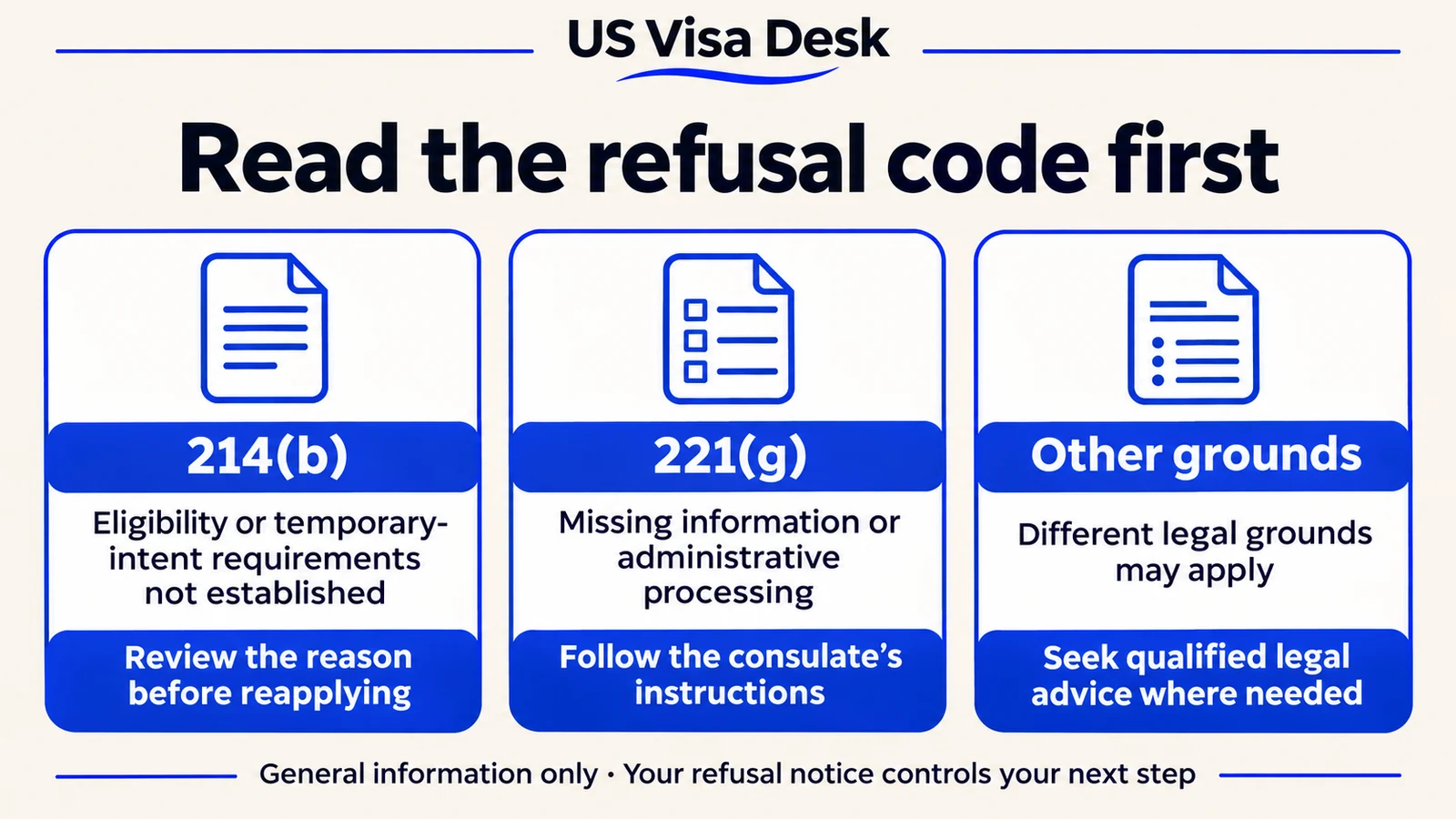
Quick answer: Check the legal section on your notice. A 214(b) refusal concerns eligibility or temporary intent; a 221(g) refusal may involve missing information or administrative processing. These require different responses. Follow your consulate’s instructions before deciding whether a fresh application is appropriate. Official refusal guidance.
General preparation information, not individual legal advice. US Visa Desk is a private assistance service, independent of the U.S. government. Source check: November 28, 2026.
What does a B1 visa rejection mean?
A refusal is a decision on an application under U.S. immigration law. Do not treat every refusal as the same problem: read the section cited on your notice, retain the document and note any instructions you received.
| Refusal category | What to understand | Starting point |
|---|---|---|
| 214(b) | Visa eligibility or the required temporary-intent standard was not established. | Review the decision and any relevant new information or significant changes. |
| 221(g) | Information may be missing, or administrative processing may be required. | Follow the specific document or processing instructions. |
| Other legal grounds | Different restrictions and possible remedies apply. | Consider qualified immigration legal advice. |
There is no appeal process for a 214(b) refusal. A fresh application generally involves a new form, fee and interview. Reapplying without understanding the previous decision is not a preparation strategy. Read the Department of State’s explanation.
A 221(g) case needs its own approach
Administrative processing is not a timetable you can reliably predict from a forum post. The State Department explains that its duration depends on the circumstances of each case. Follow instructions from the embassy or consulate handling yours; do not assume you should replace an existing case with a new application. Administrative processing information.
Review whether your planned activities fit a business visit
A B1 visa is for temporary business travel. Official examples include consulting business associates, attending professional conferences and negotiating contracts. A visitor visa does not authorise U.S. employment. Describe what you will actually do, rather than selecting a convenient label. Official visitor-visa guidance.
As a preparation exercise, write a short trip summary in your own words:
- What is the specific purpose of this trip?
- Which organisation, event or people are involved?
- What dates and locations are currently planned?
- Who is expected to pay the costs?
- What responsibilities will you return to afterward?
This summary is a way to organise your thoughts, not an interview script or an official application requirement. If your plans are uncertain, identify what remains uncertain instead of inventing a polished story.
What to do before reapplying after a B1 visa rejection
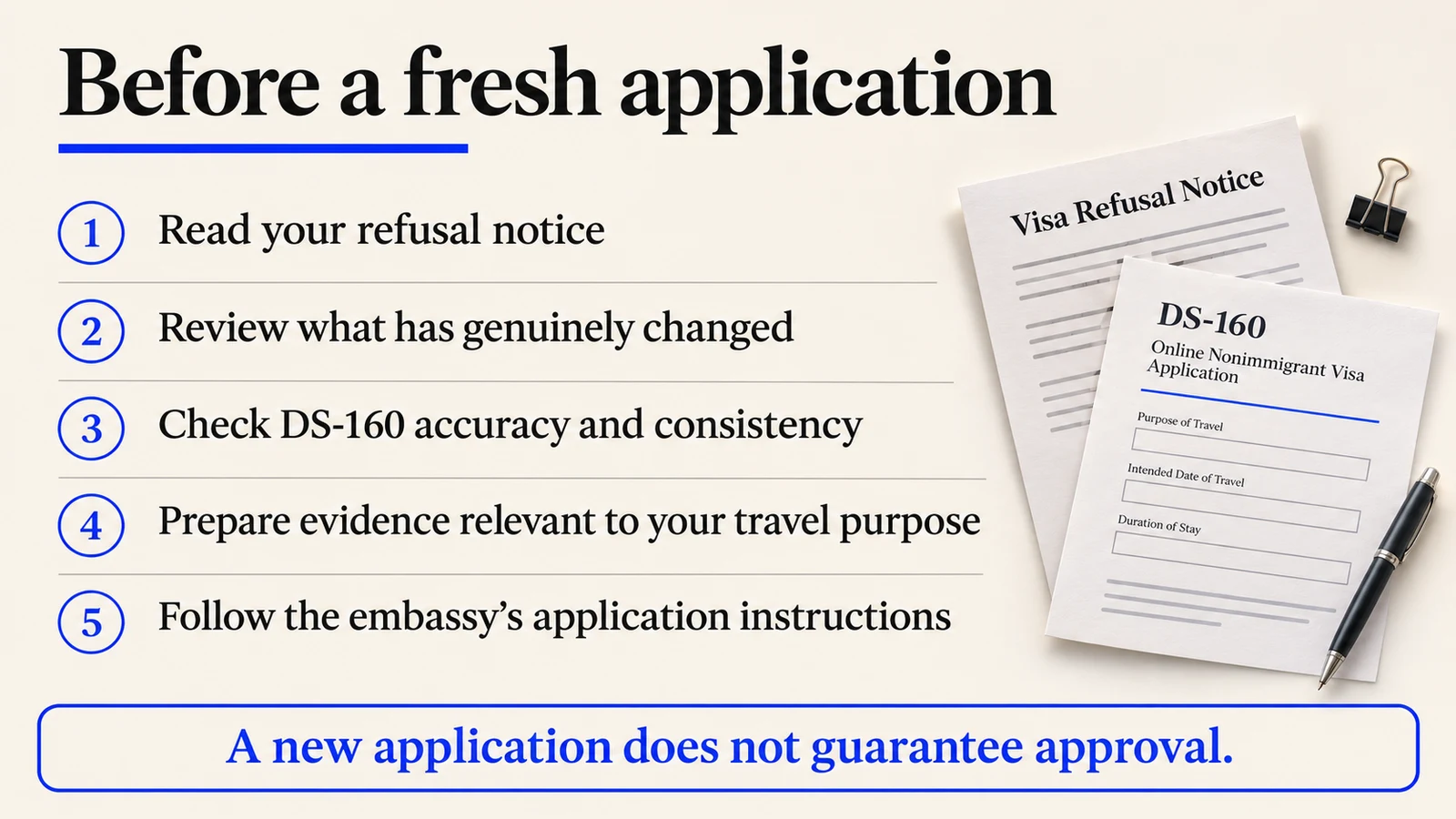
1. Record what you know—and separate it from guesses
Keep the notice and write down the questions you remember. Separate facts such as “the officer asked who would fund the trip” from guesses such as “the officer disliked my employer.” That distinction helps you review your preparation without presenting speculation as the reason for the decision.
2. Identify meaningful new information
Make a two-column working note: “information available last time” and “information available now.” The purpose is to understand whether your explanation or circumstances have genuinely changed. A thicker folder or different wording is not, by itself, a meaningful change.
3. Check your DS-160 carefully
Review the details you provide and answer every question accurately, including questions about previous refusals. If someone assists with the DS-160, identify that assistance where required and review the completed information yourself. Follow the official instructions for signing and submitting the form. DS-160 FAQs.
For your own consistency check, compare employer names, travel purpose, dates, funding and contact information across your preparation notes. Flag uncertainties for clarification rather than asking a helper to choose an answer that sounds more persuasive.
4. Organise relevant supporting information
Official guidance says additional evidence may be requested about your travel purpose, intention to leave after the visit and ability to pay. An invitation letter is not required for a visitor-visa application and does not determine the outcome. Visitor-visa documents guidance.
Use descriptive file names and a simple index so you can find information quickly. For example, a conference itinerary is easier to understand when it is clearly separated from an employer letter or your personal travel notes. Our document preparation guide can help you organise the essentials.
5. Follow the instructions for your application location
Before taking action, use the official embassy and consulate directory to find the relevant post. Read its application instructions, keep a record of what you submit and avoid relying on an undated screenshot from somebody else’s case.
Can someone get approved after a previous B1/B2 rejection?
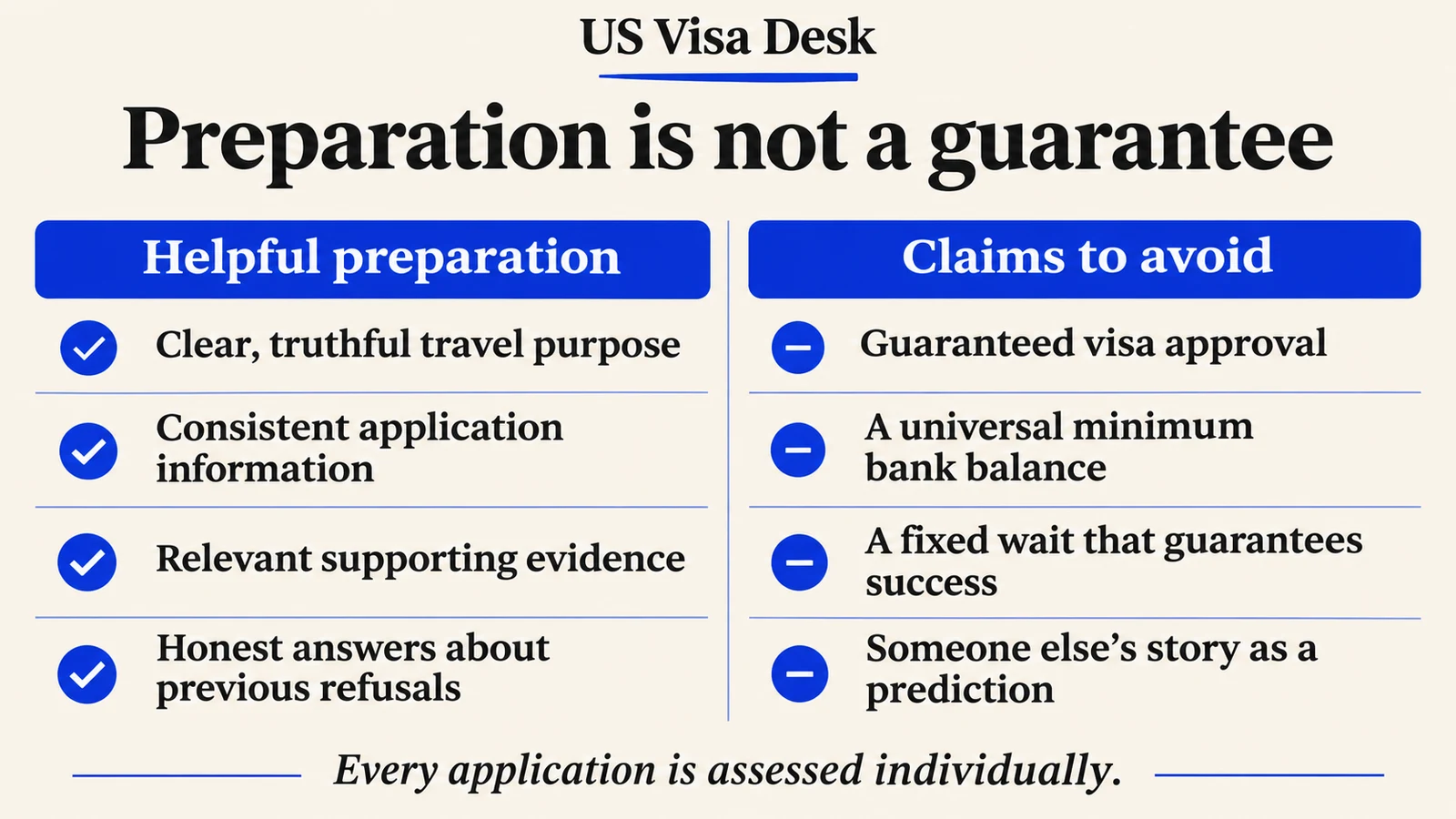
A previous refusal does not make somebody else’s later approval a forecast for you. Reapplication is possible in appropriate circumstances, but the refusal ground and the evidence matter. Check the official reapplication explanation.
When reading a B1/B2 visa rejection experience online, look for the date, application location, refusal section and what is known about the later application. A story that omits these details may be interesting without being useful for your own preparation.
We have not included an invented “approved after rejection” customer story in this guide. A responsible article should distinguish an actual documented account from a hypothetical example.
B1 visa rejection: frequently asked questions
Is B1/B2 visa rejection the same as B1 rejection?
B1 covers temporary business visits; B2 covers tourism and other permitted visitor purposes. A combined B1/B2 visa covers both categories. Whatever the visa label, use the refusal section on the notice to understand the decision. Visitor categories.
Should I copy an approved applicant’s interview answers?
No. Use preparation guides to organise your own information, not to borrow somebody else’s circumstances. Practise explaining your actual plans clearly rather than memorising a script.
Can an agency guarantee approval after rejection?
No private service can make the consular decision. Be cautious of a sales pitch that treats a package purchase as a guaranteed outcome.
Where can I get help organising a new application?
For private preparation support, explore our business-visa assistance and DS-160 assistance. For advice on the legal consequences of a refusal, consult a qualified immigration lawyer.
Prepare your next application with clarity
Start with the notice, keep your information accurate and make your next step a considered decision. If you want help understanding our preparation services, contact US Visa Desk or compare assistance packages. Government decisions remain with U.S. authorities.